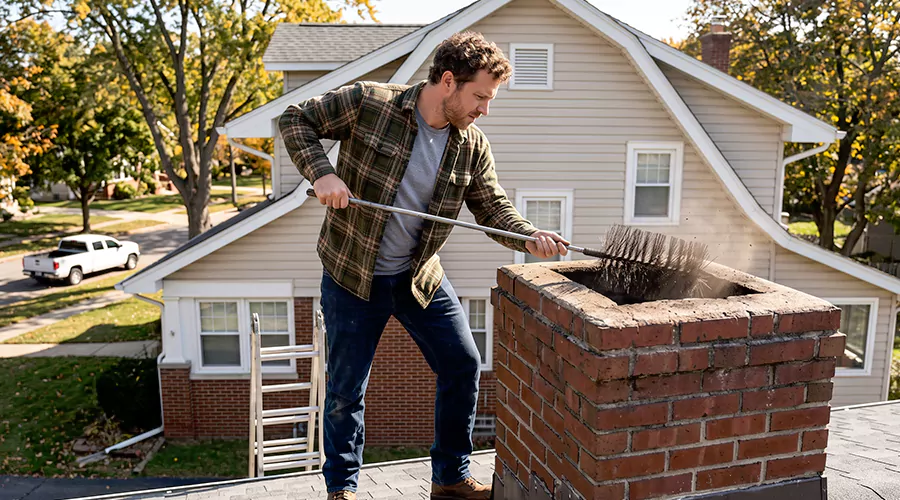
What Happens If You Skip Chimney Maintenance?
See how neglected chimney maintenance causes creosote buildup, leaks, masonry damage, and poor draft, plus how routine care prevents expensive repairs.




Based on 500+ Reviews

Proudly American
Owned & Operated

Skipping chimney maintenance can allow small problems to develop into larger and more expensive issues. A chimney is exposed to heat, smoke, moisture, weather changes, and debris throughout the year. Without regular maintenance, components such as the flue liner, masonry, chimney cap, flashing, and fireplace system can gradually deteriorate, making chimney tuckpointing an important repair option when damaged or deteriorated mortar joints need attention.
Many chimney problems are not obvious during normal use. A fireplace may appear to work properly while hidden damage continues to develop inside the chimney structure.
Chimney maintenance helps keep the entire fireplace and venting system functioning properly.
Regular maintenance can help identify and prevent:
A chimney does more than carry smoke outside. It protects the home from heat, combustion gases, and moisture exposure.
One of the most common problems caused by skipped chimney maintenance is excessive creosote buildup.
When wood burns, smoke particles can collect inside the chimney and form creosote. Over time, these deposits can become thicker and harder to remove.
Heavy creosote buildup can lead to:
Regular cleaning helps remove deposits before they become difficult to manage.
A chimney that is not maintained may contain combustible deposits that can ignite under high temperatures.
Signs of excessive buildup may include:
A chimney fire can damage internal components, including:
Damage from a chimney fire is not always visible from the outside, which is why inspection is important after any suspected fire event.
Water is one of the biggest threats to chimney systems.
Without maintenance, problems such as cracked crowns, damaged flashing, and deteriorated mortar can allow moisture to enter, making chimney repair important for addressing damage before it leads to more serious structural issues.
Water intrusion can cause:
A small leak can gradually create extensive damage if the source is not corrected.
Brick and mortar are constantly exposed to outdoor conditions.
Over time, moisture can enter small cracks and weaken the masonry.
Skipped maintenance may lead to:
Repairing small masonry issues early is usually easier than rebuilding damaged sections later.
The flue liner protects the chimney structure from heat and combustion gases.
Without inspections, problems such as:
may go unnoticed.
A damaged flue can affect how safely smoke and heat move through the chimney.
A properly functioning chimney needs good airflow to move smoke outside.
Maintenance problems can affect draft because of:
Poor draft can cause:
A damaged or missing chimney cap allows outside materials to enter.
Common chimney blockages include:
Blockages can restrict airflow and interfere with proper chimney operation.
A chimney cap and regular inspection help reduce these problems.
One of the biggest disadvantages of skipping maintenance is that minor problems can become major repairs.
| Small Problem | Possible Larger Issue |
|---|---|
| Small mortar crack | Extensive masonry damage |
| Minor leak | Wood rot and interior damage |
| Light creosote buildup | Heavy chimney deposits |
| Damaged cap | Water and animal intrusion |
| Small flue crack | Liner replacement |
Addressing problems early can help reduce repair costs and prevent larger structural damage.
A poorly maintained chimney may not operate as efficiently.
Homeowners may notice:
Maintenance helps keep the fireplace and chimney working as designed.
Chimney maintenance involves several tasks depending on the type of system.
| Maintenance Task | Purpose |
|---|---|
| Chimney inspection | Find damage and safety concerns |
| Chimney cleaning | Remove soot and creosote |
| Masonry checks | Identify cracks and deterioration |
| Chimney cap inspection | Prevent water and animal entry |
| Flashing inspection | Prevent roof leaks |
| Damper check | Confirm proper operation |
Maintenance needs vary based on chimney type, fuel source, usage, and condition.
Most chimneys should be inspected at least once a year.
Cleaning frequency depends on:
Wood-burning systems often require more frequent attention because they produce smoke and combustion deposits.
Homeowners can perform basic checks, such as looking for visible cracks, damaged caps, or water stains.
However, many chimney problems are hidden inside areas that are difficult to access.
Professional inspection may be needed for:
Simple maintenance habits can reduce the chance of major problems.
Helpful steps include:
Preventive maintenance is generally less expensive than emergency repairs.
Skipping chimney maintenance can lead to problems ranging from poor fireplace performance to serious structural damage. Creosote buildup, water leaks, damaged masonry, flue problems, and blockages often develop gradually and may not be obvious until repairs become necessary.
Regular inspections and maintenance help identify issues early and keep the chimney system operating properly. A well-maintained chimney is less likely to experience unexpected problems and can provide safer, more reliable fireplace operation.
Without cleaning, soot and creosote can accumulate inside the chimney, which may reduce airflow and increase fire concerns.
Most chimneys should be inspected at least once a year. Cleaning frequency depends on usage and buildup.
Yes. Cracked crowns, damaged flashing, and deteriorated masonry can allow water to enter and damage surrounding materials.
Yes. Gas fireplaces still require inspections to check venting, components, and safe operation.
Yes. Issues such as flue cracks, internal damage, and blockages may not be visible without proper inspection.
Usually. Regular maintenance can help identify smaller problems before they develop into larger and more expensive repairs.
See how neglected chimney maintenance causes creosote buildup, leaks, masonry damage, and poor draft, plus how routine care prevents expensive repairs.
